Tennessee Land Expert
How to Evaluate Timber Value Before Selling Your Tennessee Land
Most landowners in Middle Tennessee know their timber has value. Very few know how much — or how to factor it into a land sale without leaving money behind.
I've watched sellers accept offers that completely ignored the standing timber on their property. Not because the buyers were dishonest, but because nobody in the transaction had the background to evaluate it properly. A residential agent pricing land by the acre doesn't think about basal area, species composition, or harvest timing. They price the dirt. The timber gets bundled in and forgotten.
That's a problem, because on many properties across Wayne, Lewis, and Giles Counties, timber can represent a significant portion of the property's total value. Selling land in Tennessee without understanding your timber is like selling a house without appraising the kitchen renovation you just finished.
Here's how I approach timber evaluation — and what you should know before listing.
Start With What's Actually Growing
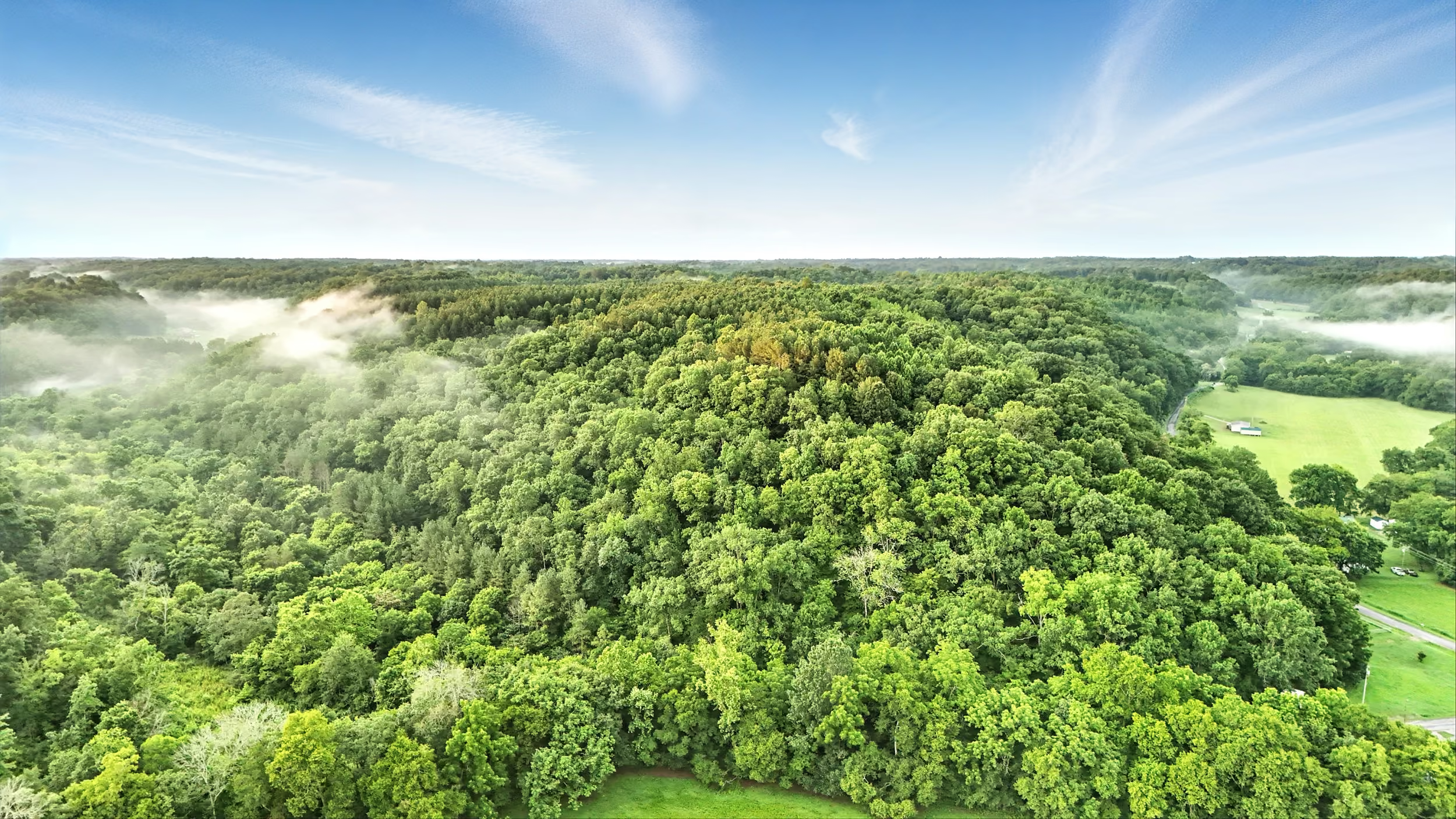
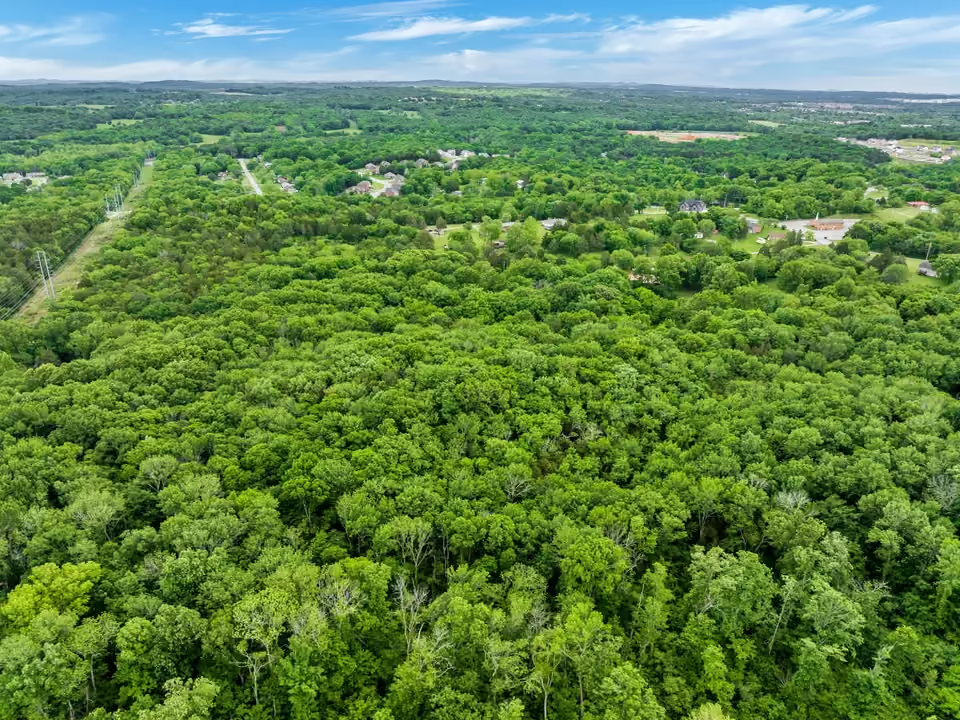
Not all timber is created equal. A 100-acre tract covered in mature hardwoods carries a very different value profile than one dominated by Virginia pine or mixed scrub. The first step in any evaluation is identifying what species are present, their approximate age and diameter, and whether they're approaching or past optimal harvest maturity.
In Middle Tennessee, the species that typically carry the most commercial value include white oak, red oak, poplar (yellow poplar/tuliptree), walnut, and cherry. White oak in particular has seen strong demand in recent years, driven by the bourbon and cooperage industries. If you have mature white oak on your property, that alone can shift what your land is worth.
My background in biology is where this evaluation starts. I'm not guessing based on what the tree line looks like from the road — I'm walking the property and reading the stand composition, canopy structure, and understory health for what they actually tell us.
Understand Volume, Not Just Presence
Knowing you have hardwoods is step one. Knowing the volume — measured in board feet — is where real value gets calculated.
A professional timber cruise gives you that number. It involves systematically sampling trees across the property, measuring diameter at breast height (DBH), estimating merchantable height, and calculating board-foot volume using standard log rules. This isn't something you can do from a satellite image or a drone flyover. It requires boots on the ground and someone who knows what they're measuring.
If you're considering selling land in Tennessee and the property has any meaningful timber, I'd recommend getting a cruise done before you set a listing price. The cost of the cruise is small relative to the pricing clarity it provides — and it gives you a documented number to reference during negotiations rather than relying on a buyer's estimate.
Factor in Access and Terrain
Timber is only worth what a logger can reach. A beautiful stand of mature walnut on a steep, north-facing slope with no road access doesn't carry the same value as the same species on a gently rolling tract with an existing logging road.
When I evaluate a property, I'm looking at access points, road infrastructure, slope grade, stream crossings, and proximity to mills. All of these affect the cost of harvest, which directly affects what a timber buyer will pay — and by extension, what the land itself is worth to the right purchaser.
Properties in Wayne and Lewis Counties often have the terrain complexity that makes this evaluation critical. What looks like remote, undervalued land on paper may be carrying significant timber value that a thorough walkthrough reveals — or the opposite.
Know the Difference Between Timber Value and Land Value
This is where most agents get it wrong: they treat timber as part of the land value rather than as a separate, quantifiable asset.
In a well-structured sale, you should understand both numbers independently. The land has a value based on location, acreage, water access, road frontage, and development or recreational potential. The timber has a value based on species, volume, accessibility, and current market conditions.
Separating these two allows you to make informed decisions. You might sell the land with timber intact at a premium. You might harvest the timber first and sell cleared land to a developer. You might sell timber rights separately and retain the property. Each option produces a different outcome, and the right choice depends on your goals — but you can't make that decision without knowing both numbers.
Current Market Conditions Matter
Timber pricing fluctuates with demand, mill capacity, transportation costs, and seasonal cycles. A tract that's worth one number in spring may carry a different value in late fall when logging conditions change. Export demand, housing starts, and even cooperage orders for the bourbon industry all play a role.
This is one of the reasons I tell sellers not to rush. If the timber market is soft, it may be worth waiting six months. If white oak prices are up, it may be worth harvesting before listing. Having an agent who tracks these conditions — and who understands how timber markets intersect with the land market — gives you options most sellers never see.
What This Means for Your Sale
If you own land in Tennessee with timber, the evaluation process isn't optional — it's foundational. Without it, you're either leaving money on the table or pricing yourself out of the market without realizing why.
When I work with sellers across Middle Tennessee, timber evaluation is part of my standard process. It's not an add-on or an afterthought. My biology degree and years spent studying land ecosystems inform how I read a property, and that translates directly into how I price and position it for sale.
If you're considering selling and want to understand what your timber is actually worth, that conversation starts before the listing goes live — not after an offer comes in.
[Contact Paul →]
More Tennessee Land Resources

What Clients Say
Let's talk about your land
Whether you're buying your first recreational tract or selling generations of family land — Paul picks up the phone. No intake forms. No scheduling links. Just a direct conversation.