Tennessee Land Expert
Investment
Land remains one of the most reliable long-term investments in Middle Tennessee — but only when the acquisition is informed by more than a price per acre and a proximity pin to Nashville. Paul Morrison works with investors, developers, and long-term holders who understand that land value is driven by specific, measurable variables: zoning trajectory, utility infrastructure, road access, soil and terrain, timber assets, and the competitive landscape within a given submarket.
Whether a buyer is evaluating a subdivision-ready tract in the Nashville growth corridor or a large rural hold in a county that has not yet been priced for its potential, Paul provides the evaluation depth that separates a sound investment from an expensive guess.
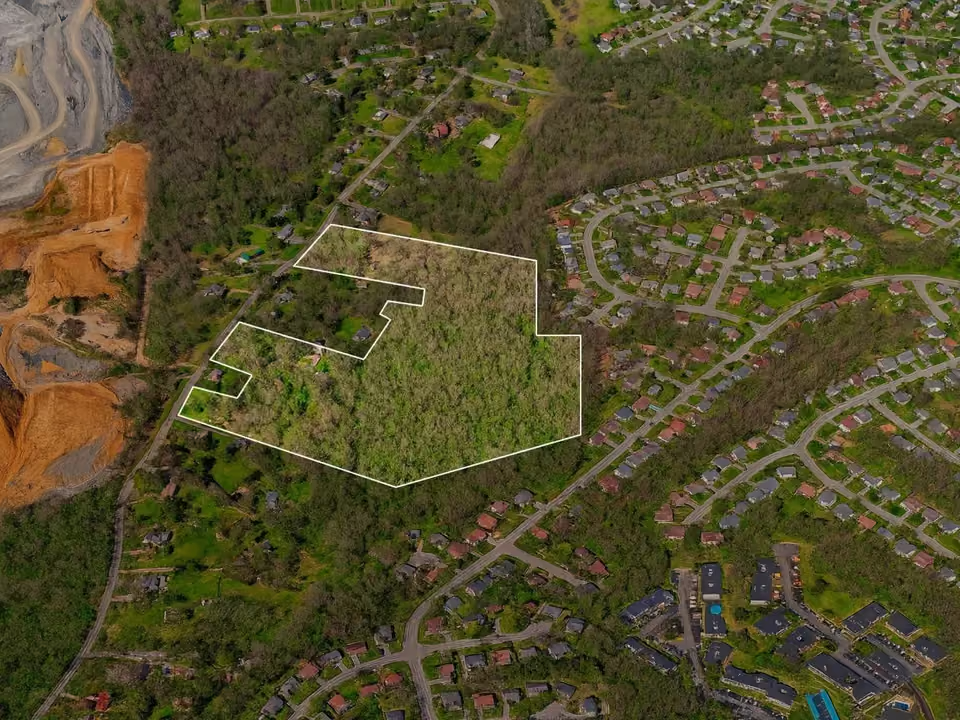
Featured Tennessee Land For Sale
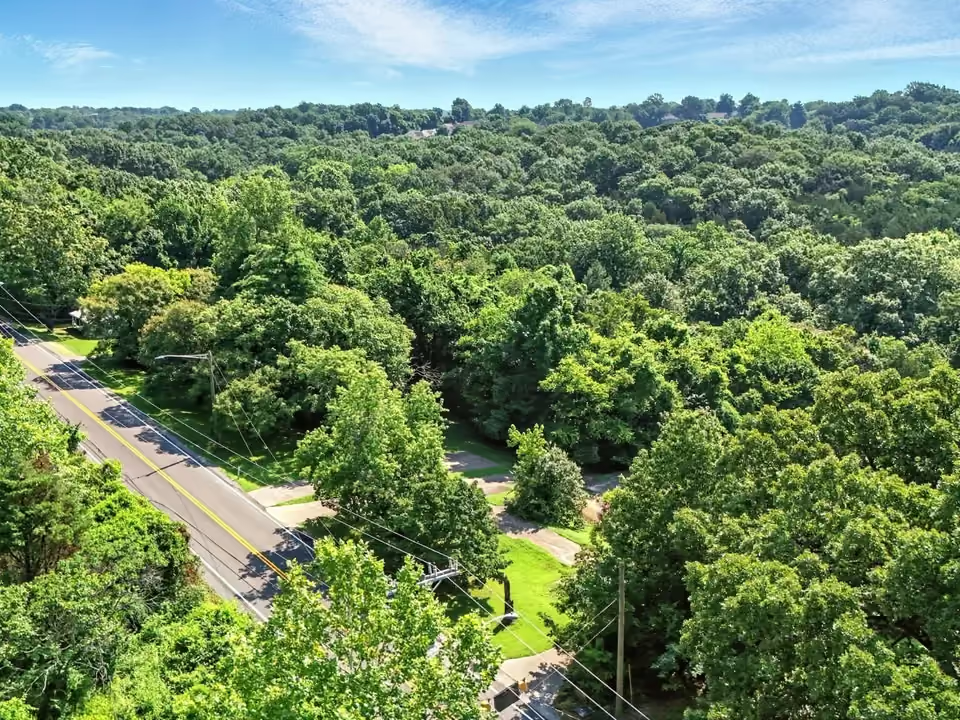
How Paul Evaluates Land as an Investment
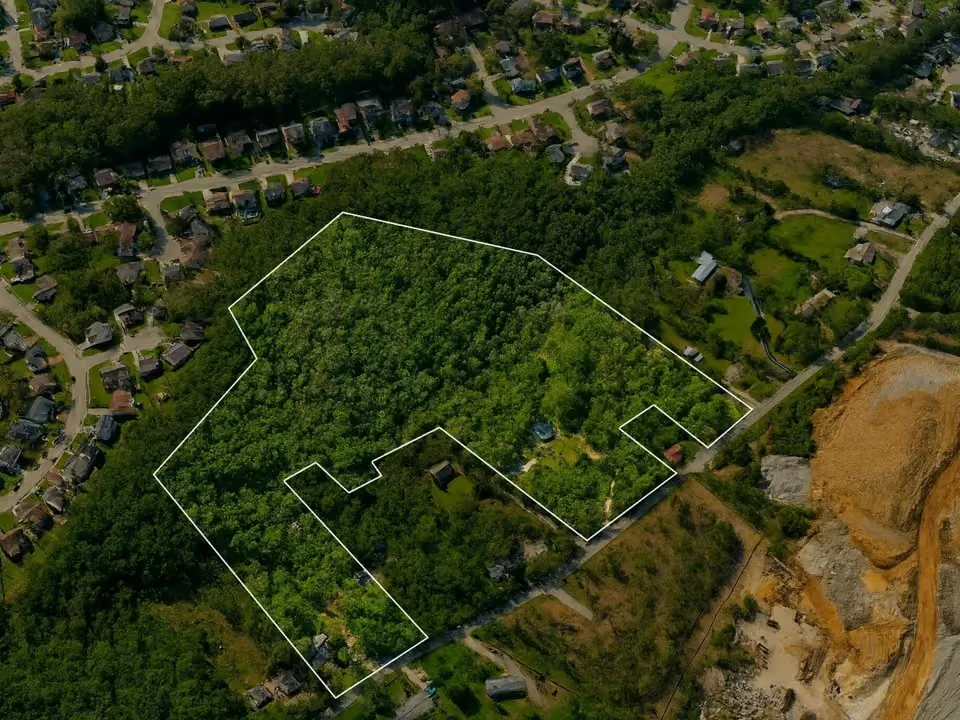
Investment land in Middle Tennessee falls into distinct categories, and each requires a different evaluation framework. Development tracts — parcels positioned for residential or commercial subdivision — are valued on zoning feasibility, utility proximity, road classification, topography, and the absorption rate of competing projects in the submarket.
Paul tracks planning commission activity, sewer district expansion, and road improvement projects across Williamson, Rutherford, and Davidson Counties to identify parcels where infrastructure investment is signaling future development viability before the market fully prices it in. Timber holdings represent a different investment thesis: standing hardwood is an appreciating asset with its own market cycle, and properties with mature white oak, red oak, and poplar in Wayne, Lewis, and Giles Counties can generate returns through selective harvest while the underlying land appreciates on a separate timeline.
Long-term agricultural and rural holds offer a third path — large tracts at accessible price points in counties positioned along growth corridors that have not yet experienced development pressure, where patient capital benefits from regional population trends and infrastructure expansion over a five- to fifteen-year window. Paul evaluates each of these categories on its own terms and helps investors match their timeline, risk tolerance, and return expectations to the right type of land in the right part of the market.
Let's talk about your land
Whether you're buying your first hunting tract or ready to move generations of family land, the conversation starts with a phone call.