Tennessee Land Expert
Middle Tennessee Hunting Land: What to Look for Before You Buy
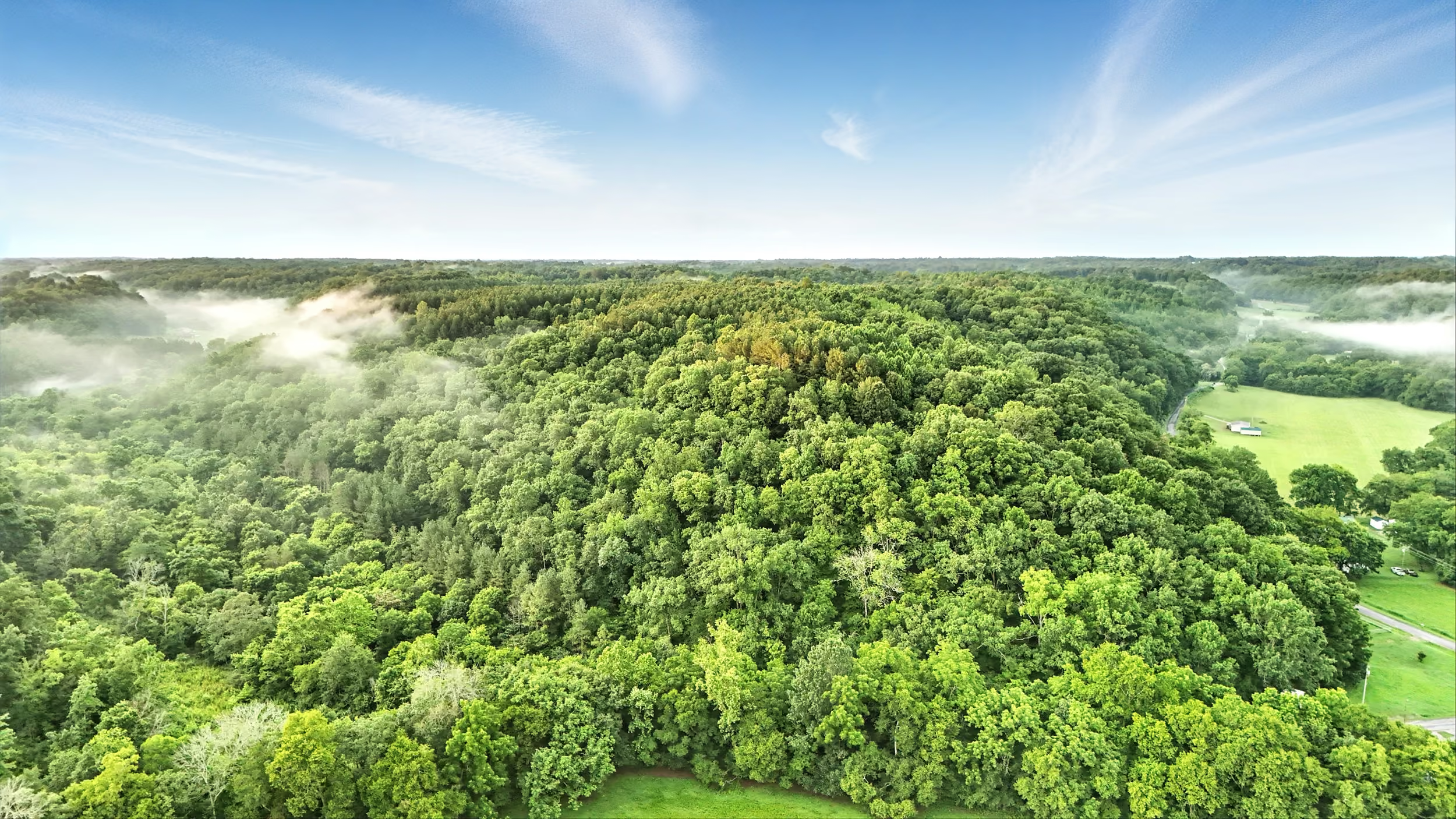
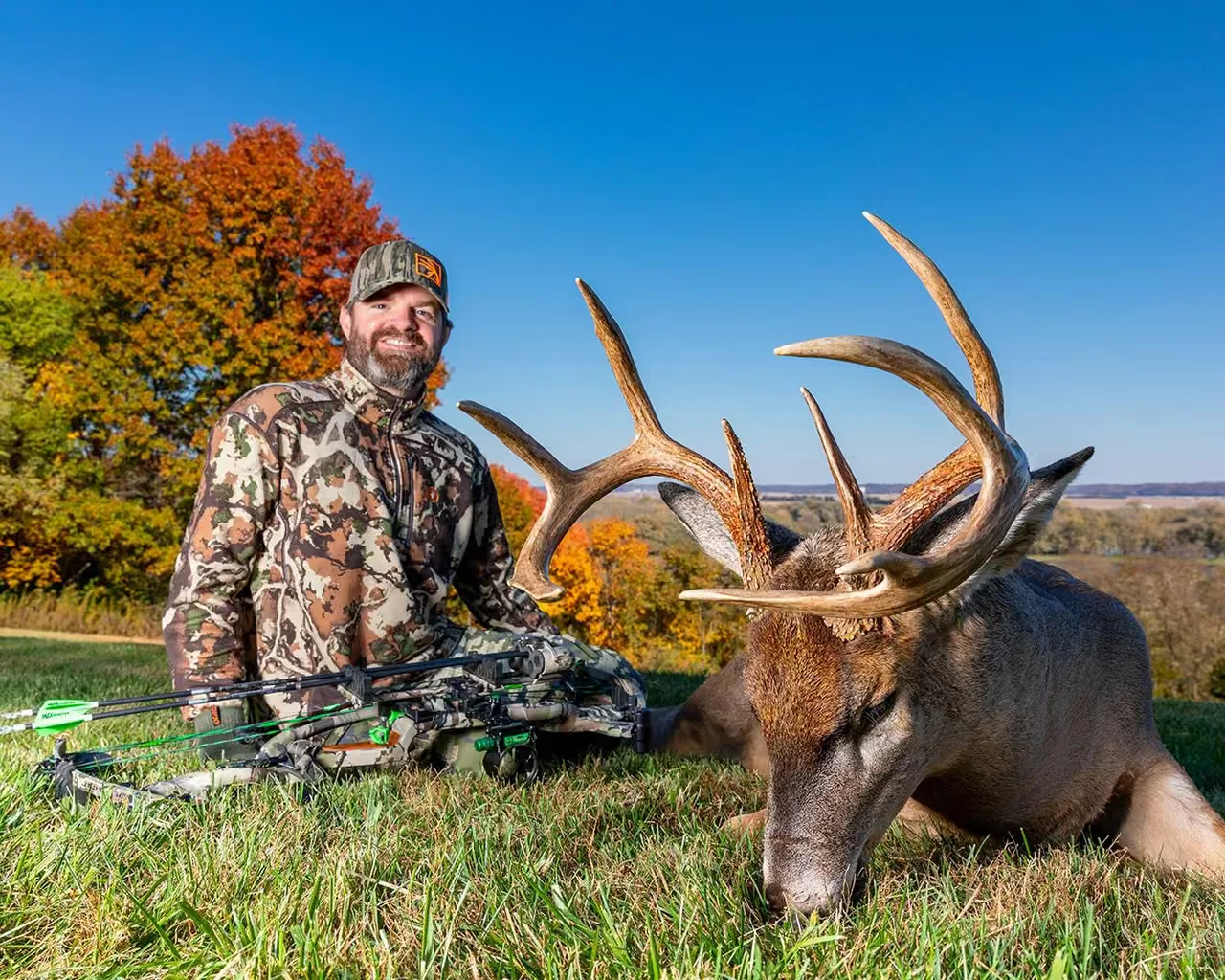
Buying hunting land in Middle Tennessee is one of the best investments a sportsman can make — if you buy the right property. The wrong one costs you the same money and gives you years of frustration.
I see it regularly. A buyer finds an affordable 80-acre tract, gets excited about the price per acre, and closes without ever walking the interior. Six months later they're wondering why they aren't seeing deer, why the access road washes out every spring, or why the neighboring property's ag operation pushes game off the land during the season that matters most.
The difference between a recreational property that delivers and one that disappoints almost always comes down to what was evaluated before the purchase — not what was done to the land after. My Deer Steward 2 certification through the National Deer Association exists for exactly this purpose: understanding how land, habitat, and wildlife management intersect, and reading a property for what it can actually produce.
Here's what I evaluate when a buyer comes to me looking for hunting land in Middle Tennessee.
Water Is Non-Negotiable
Every serious hunting property needs a reliable, year-round water source. Deer, turkey, and other game species orient their daily movement patterns around water. A property without it — or with only seasonal drainage that dries up by August — is a property where wildlife passes through but doesn't stay.
I'm looking for perennial creeks, spring-fed ponds, or natural seeps that hold water through the late summer and early fall when it matters most. The location of water on the property also matters. A creek running along the boundary line benefits the neighboring tract as much as yours. Water centered on the property, or multiple water sources spread across the acreage, gives you significantly more control over where game stages and moves.
When I walk a property in Wayne or Lewis County, the water story is one of the first things I assess — and one of the first things I explain to buyers who may not realize how much it drives the quality of the hunting experience long-term.
Timber Diversity Tells You More Than Timber Volume
A tract of uniform pine plantation is a timber asset. It's not a strong hunting property. What you want for quality deer habitat is species diversity — a mix of hard mast producers like white oak and red oak, soft mast like persimmon and crabapple, and a healthy understory that provides browse and bedding cover.
My biology background is where this evaluation gets specific. I'm reading the stand composition for what it provides across the full calendar: spring green-up browse, summer cover, fall mast production, and winter thermal protection. A property with a strong diversity of age classes and species is a property that holds deer year-round rather than only during a narrow window when one food source is producing.
I also look at the edge habitat — where timber meets fields, where mature hardwoods transition to younger regeneration, where creek bottoms create natural travel corridors. These edges are where deer movement concentrates, and properties with more edge relative to their total acreage tend to produce better hunting consistently.
Understand the Neighborhood
Your 100 acres doesn't exist in isolation. What's happening on the surrounding properties directly affects the quality of your hunting experience. If the adjacent landowner runs a row-crop operation with heavy equipment traffic during October, that changes the game movement pattern on your property. If the tract across the road is leased to a hunting club that runs dogs, that changes it further.
Before I recommend a recreational property, I research the surrounding land use. I look at adjoining parcel sizes, ownership patterns, agricultural activity, and whether neighboring tracts are enrolled in wildlife management programs. A property bordered by other large, low-pressure tracts is a fundamentally different hunting experience than the same acreage surrounded by small residential parcels or active ag.
This is information that doesn't appear on a listing sheet, but it shapes the long-term value of the property more than almost any on-site feature.
Terrain and Access Work Together
The best hunting land has terrain complexity — ridges, hollows, benches, saddles, and creek bottoms that create natural funnels and staging areas. Flat, featureless land can hold game, but it's harder to hunt strategically because deer movement is dispersed rather than concentrated.
That said, terrain only works for you if you can access it without blowing up the property every time you hunt. I evaluate access routes, prevailing wind patterns relative to stand locations, and whether the property allows you to enter and exit without pushing deer off the areas you're hunting. A property with great terrain but only one access point on the wrong side can actually work against you.
For properties in Giles and Wayne Counties — where the terrain gets more dramatic — this evaluation is especially important. The land that looks the most impressive on a topo map isn't always the most huntable on the ground.
Food Sources: Natural and Potential
I evaluate both what the land is currently producing and what it could produce with management. A property with existing native food sources — oaks dropping mast, persimmon groves, natural browse — has an immediate foundation. A property with open ground suitable for food plots has management potential that adds value over time.
The Deer Steward program trains you to think about carrying capacity — how many deer the habitat can support in its current state, and how management actions like food plots, timber stand improvement, or prescribed fire could increase that capacity. I bring that framework to every recreational property I evaluate because it tells buyers not just what they're getting today, but what the property can become with intentional management.
Properties with both strong existing habitat and room to improve are the ones that appreciate in recreational value over time. That combination is what I'm helping buyers identify.
Mineral Rights and Legal Considerations
In Tennessee, mineral rights can be severed from surface rights. On rural land — especially in counties with historical mining or extraction activity — it's worth confirming that mineral rights convey with the sale. A property where a third party holds mineral rights could be subject to future surface disruption that fundamentally changes the recreational experience.
I also flag properties where timber rights may have been previously sold or where conservation easements restrict certain management activities. These aren't always disclosed upfront, and they can affect both the current use and resale value of a recreational property.
What This Means for Your Search
Buying hunting land isn't a transaction — it's a long-term commitment to a piece of ground you'll manage, improve, and hunt for years. The purchase decision deserves the same rigor as any serious investment, and it benefits from someone who reads land the way it's meant to be read: as a living system, not a listing sheet.
My Deer Steward certification, biology background, and years spent hunting and evaluating land across Middle Tennessee are the foundation of how I work with recreational buyers. I'm not showing you acreage and hoping you like the view. I'm helping you find a property that performs — this season and for years to come.
If you're searching for hunting land in Tennessee and want an evaluation that goes deeper than square footage and price per acre, let's talk.
[Contact Paul →]
More Tennessee Land Resources
What Clients Say
Let's talk about your land
Whether you're buying your first recreational tract or selling generations of family land — Paul picks up the phone. No intake forms. No scheduling links. Just a direct conversation.