Tennessee Land Expert
The 5 Factors That Determine Land Value in Tennessee
Ask most people what determines land value and you'll hear the same answer: location. It's not wrong — but it's incomplete. Two adjacent parcels in the same county, the same zip code, even the same road can carry very different values depending on what's actually on the ground.
I evaluate land across Middle Tennessee for both buyers and sellers, and the conversations that produce the best outcomes are the ones that start with a clear understanding of what drives value — not assumptions based on a neighbor's sale or a per-acre average pulled from a listing site.
There are five factors I come back to on every property I assess. They apply whether you're buying recreational land in Wayne County, selling a development tract in Williamson County, or trying to determine what your family's farm ground is actually worth in today's market.
1. Water
Water is the single most undervalued factor in rural land pricing. A perennial creek, a spring-fed pond, or reliable natural water sources add measurable value to a property — for recreational use, agricultural use, livestock, and wildlife habitat. Properties with strong water features command premiums that properties without them simply don't, regardless of how similar they look on paper.
I'm not just checking whether water is present. I'm evaluating the type of water source, its reliability through seasonal changes, where it sits relative to the property boundaries, and what it means for the intended use. A creek that runs along the back boundary of a 100-acre tract is a different asset than one that bisects the property and creates natural management zones on both sides.
For development land, water takes on a different dimension — stormwater management, floodplain mapping, and drainage infrastructure all tie back to the water story on a given parcel. In both cases, understanding water is foundational to understanding value.
2. Topography
The shape of the land determines what you can do with it. Flat, open ground is ideal for row-crop agriculture or residential subdivision. Rolling terrain with ridges, hollows, and natural funnels creates premium hunting and recreational habitat. Steep grades limit access, increase construction costs, and reduce usable acreage.
When I walk a property, I'm reading topography for its practical implications. A gently rolling 50-acre tract in Rutherford County might yield 45 buildable acres for a developer. The same acreage with steeper terrain and drainage corridors might yield 30. That difference changes the math on the entire transaction.
For recreational buyers, topography is an asset rather than a limitation — terrain complexity creates the natural funnels, staging areas, and elevation changes that concentrate wildlife movement and make a property more huntable. The same feature that reduces development density can increase recreational value. Knowing which lens to apply is part of understanding what a property is actually worth.
3. Road Frontage and Access
How you get to a property — and how much of it faces a public road — has an outsized impact on value. Road frontage affects visibility, development potential, subdivision feasibility, and the simple practicality of daily access.
A property with 1,200 feet of frontage on a county road offers options that a landlocked parcel accessed through an easement does not. Frontage can be subdivided. It can support multiple entry points. It provides flexibility that buyers — especially developers and investors — pay a premium for.
The type of road matters as much as the frontage length. State routes carry different access requirements than county roads. Paved roads carry different expectations than gravel. Proximity to interchanges, town centers, or growth corridors adds a location multiplier on top of the raw frontage number.
I also evaluate access quality beyond the frontage itself. A property with strong road frontage but a quarter-mile internal drive that floods during heavy rain has an access problem that the listing description won't mention. These details surface when you walk the property with someone who knows what to look for.
4. Zoning and Permitted Use
What you're allowed to do with a piece of land defines its market. Agricultural zoning, residential zoning, commercial zoning, and conservation overlays each create a different value ceiling — and a different buyer pool.
In Middle Tennessee's growth counties, zoning is a moving target. Parcels that were agricultural five years ago are being rezoned for residential development as municipalities respond to population growth and infrastructure expansion. Understanding not just the current zoning but the trajectory — what the comprehensive plan signals, what adjacent parcels have been approved for, whether utility extensions are planned — is how you evaluate what a property might be worth in the near future, not just today.
For sellers, this matters because a property positioned as a development opportunity commands a different price than the same property marketed as a farm. For buyers, it matters because purchasing land ahead of a zoning change — with the right due diligence — is one of the most reliable ways to build equity in rural real estate.
I track planning commission activity, infrastructure investment, and zoning trends across the counties I serve because this information directly affects how I price land for sellers and how I advise buyers on acquisition timing.
5. Timber and Natural Resources
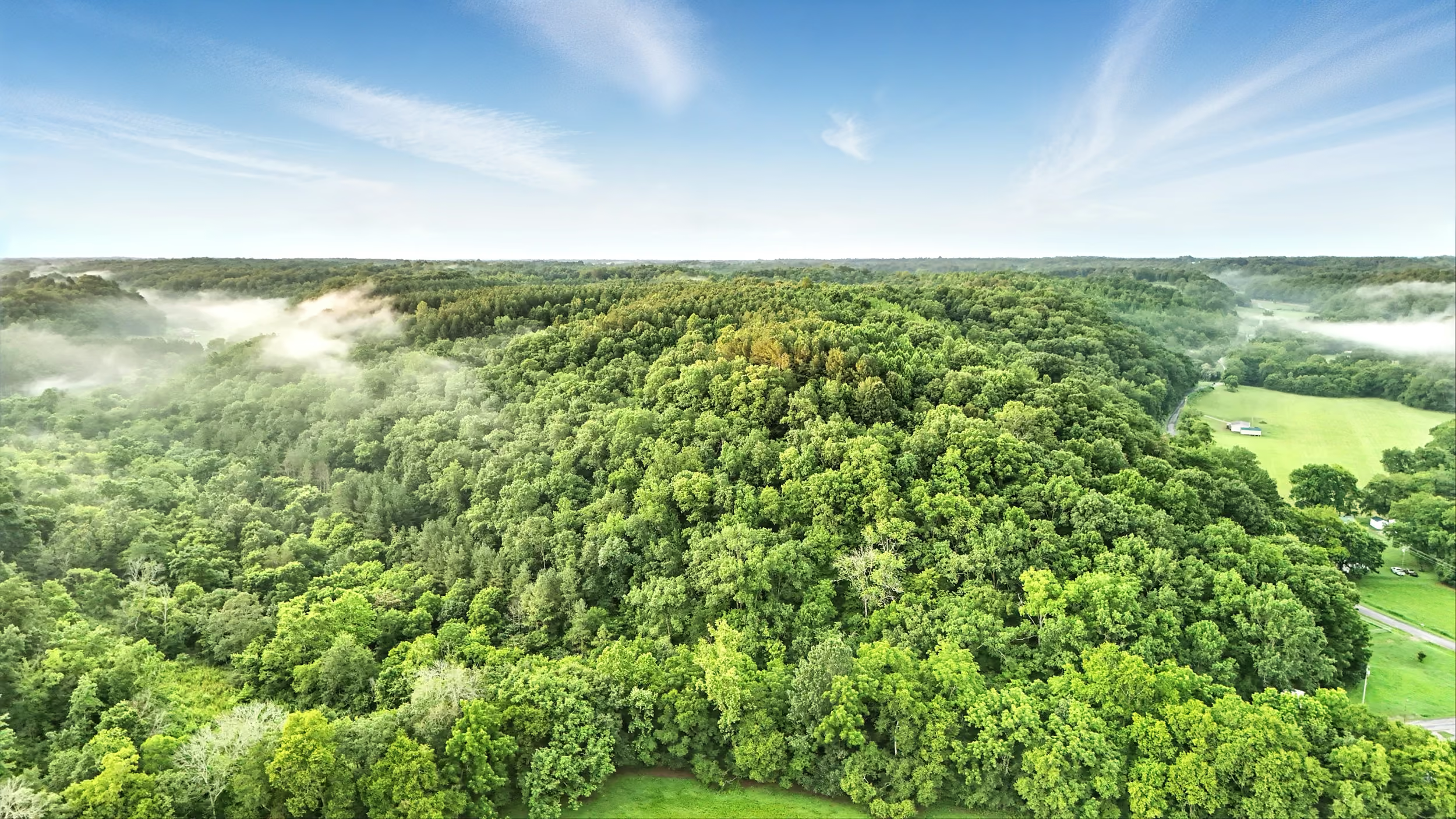
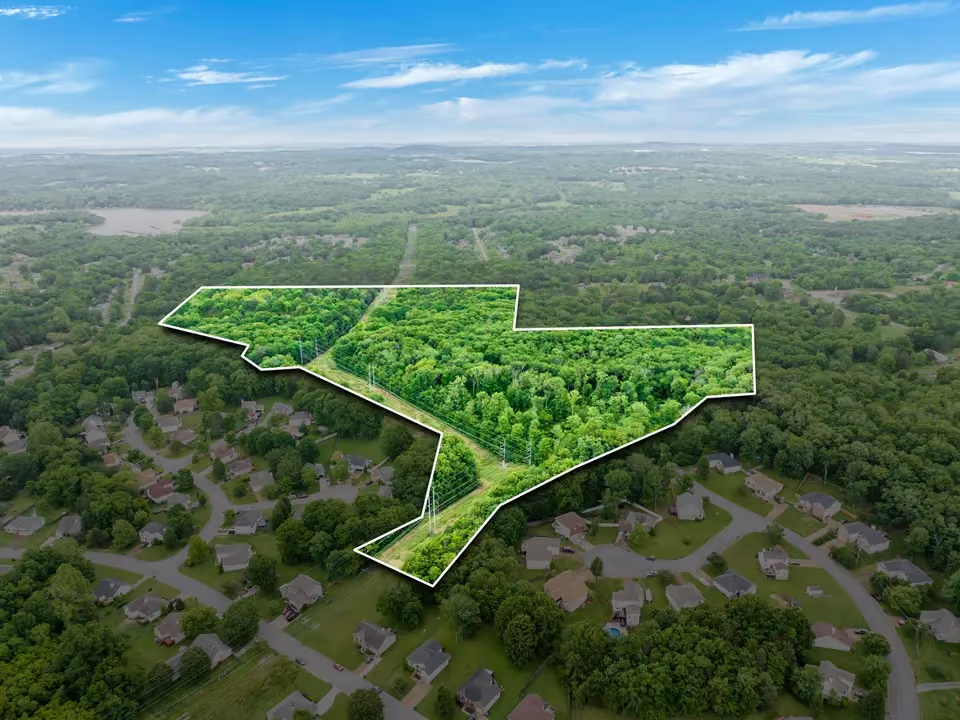
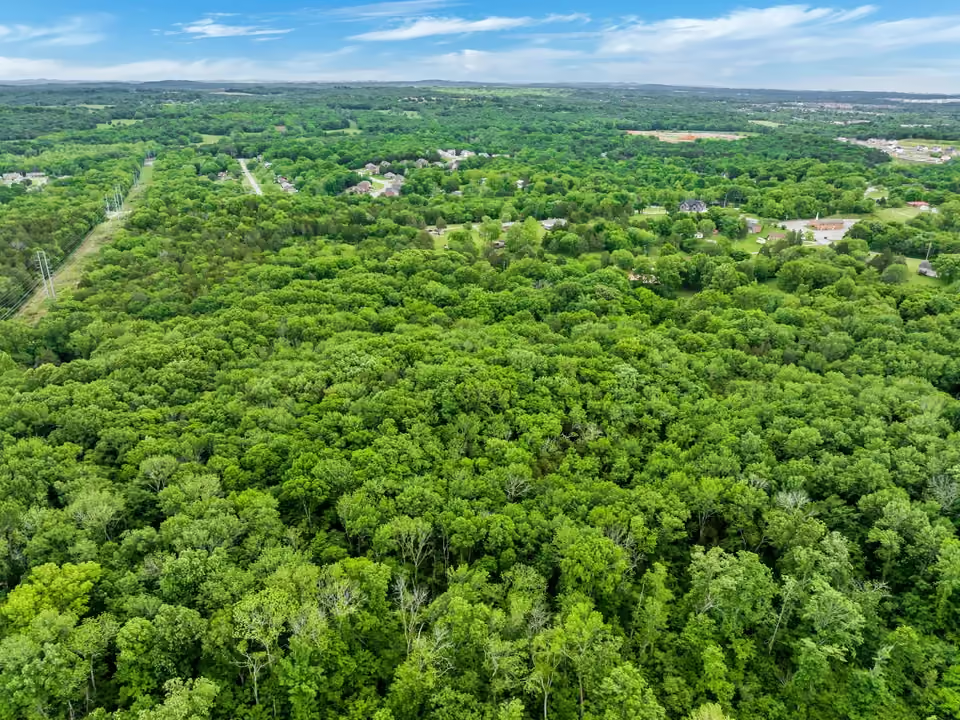
Standing timber is a quantifiable asset that most agents treat as scenery. On properties across Wayne, Lewis, Giles, and similar counties in Middle Tennessee, timber can represent a significant component of total property value — sometimes rivaling the land value itself.
Species composition, age, diameter, accessibility, and proximity to mills all factor into what timber is worth. A tract with mature white oak carries a different timber profile than one dominated by pine or mixed hardwood scrub. My biology background allows me to evaluate timber stands with a level of specificity that goes beyond a general impression — I'm assessing species mix, canopy health, understory quality, and harvest feasibility as part of my standard property evaluation.
Beyond timber, I look at other natural resource indicators: soil quality for agricultural use, wildlife habitat value for recreational marketing, and any mineral or water rights that may or may not convey with the sale. These factors are easy to overlook and expensive to discover after closing.
How These Factors Work Together
No single factor determines land value in isolation. A property with exceptional water and timber but no road access is a different proposition than a property with strong frontage and flat terrain but no natural features. The interaction between these five factors is what produces the real number — and understanding that interaction is what separates a precise valuation from a guess.
When I evaluate land for a seller, I'm building a complete picture across all five factors so the listing price reflects what the property actually offers, positioned toward the buyer pool most likely to pay for it. When I work with a buyer, I'm using the same framework to identify whether a property is priced fairly — or whether it carries value (or liabilities) that the listing doesn't communicate.
This evaluation process is the foundation of every transaction I handle. It's informed by a biology degree, a Deer Steward 2 certification, and years spent walking, studying, and selling land across Middle Tennessee. If you're buying or selling and want an honest read on what a property is worth, that's where the conversation starts.
[Contact Paul →]
More Tennessee Land Resources

What Clients Say
Let's talk about your land
Whether you're buying your first recreational tract or selling generations of family land — Paul picks up the phone. No intake forms. No scheduling links. Just a direct conversation.